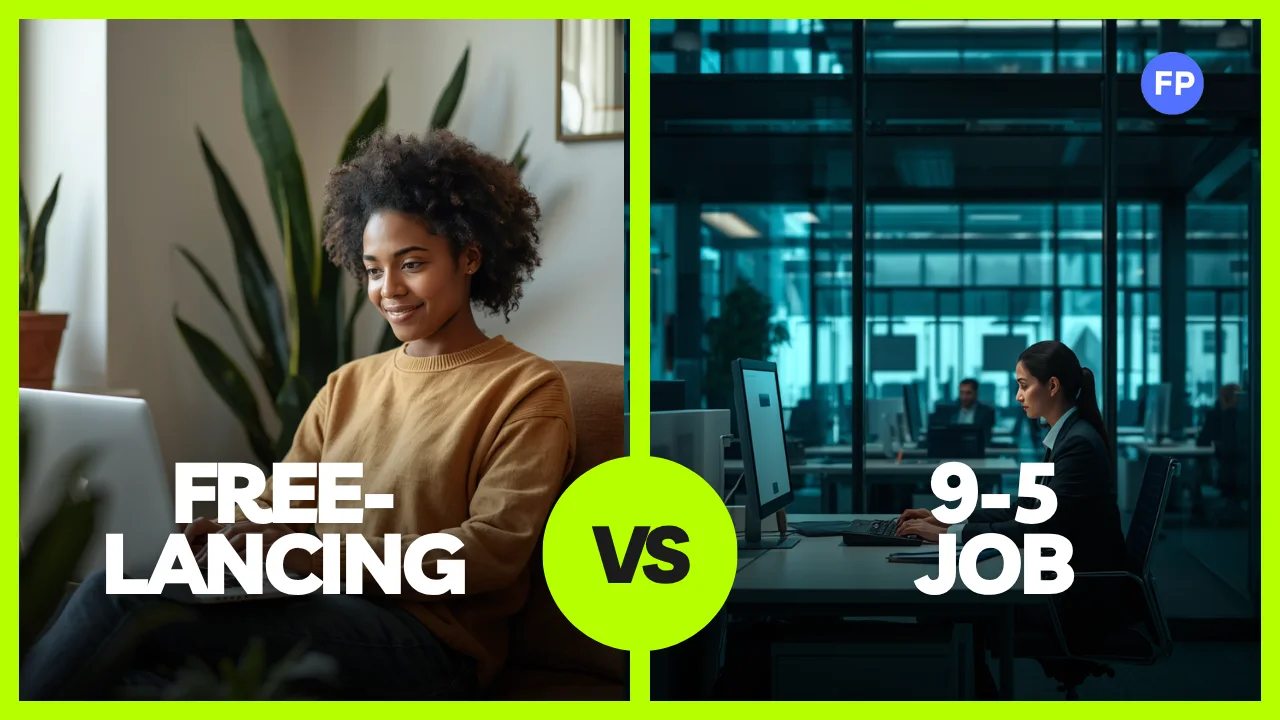
In today’s fast-changing world, one question is becoming more common than ever: should you choose freelancing or stick with a traditional job? With the rise of the internet, remote work, and digital skills, people now have more career options than any generation before.
Some people prefer the stability of a job, while others are attracted to the freedom of freelancing. But which one is actually better?
The truth is, there is no one-size-fits-all answer. The better choice depends on your personality, goals, lifestyle, and risk tolerance. In this detailed guide, we will break down everything you need to know about freelancing vs job so you can make the right decision for yourself.
Table of Contents
Understanding the Basics
Before comparing, let’s first understand what each option really means.

What is a Job?
A job is a traditional form of employment where you work for a company or organization. You have a fixed role, fixed salary, and usually fixed working hours.
In a job:
- You are an employee
- You get paid monthly
- You follow company rules
- You work under a manager or boss
Jobs are structured and predictable.

What is Freelancing?
Freelancing is self-employment. You offer your skills and services to clients on a project basis instead of working for one employer.
In freelancing:
- You are your own boss
- You choose your clients
- Your income depends on your work
- Your schedule is flexible
Freelancing is independent and dynamic.

Key Differences Between Freelancing and Job
Let’s compare both options based on important factors.
1. Income Stability
A job provides stable income. You receive a fixed salary every month, regardless of workload.
Freelancing, on the other hand, has variable income. Some months you may earn a lot, while other months may be slow.
Which is better?
If you prefer security and predictability, a job is better. If you are comfortable with uncertainty and want higher earning potential, freelancing can be more rewarding.
2. Freedom and Flexibility
This is where freelancing stands out.
In a job:
- You follow fixed working hours
- You may need to commute
- You have limited leave options
In freelancing:
- You can work anytime
- You can work from anywhere
- You can take breaks when needed
If freedom is important to you, freelancing clearly has an advantage.
3. Work-Life Balance
Many people assume freelancing gives better work-life balance, but it depends on how you manage your time.
In a job:
- Work hours are fixed
- After office, you are usually free
In freelancing:
- You control your schedule
- But you may work longer hours, especially in the beginning
Freelancing can give better balance, but only if you manage it properly.
4. Career Growth
Jobs usually have a structured growth path.
You may get:
- Promotions
- Salary increments
- New responsibilities
Freelancing growth is different.
You grow by:
- Increasing your skills
- Charging higher rates
- Working with better clients
Freelancing has unlimited growth potential, but it depends entirely on your efforts.
5. Job Security
A job is often considered more secure, but in reality, it depends on the company and market conditions.
Employees can face:
- Layoffs
- Company shutdowns
- Role changes
Freelancers face:
- Client loss
- Irregular work
In freelancing, you are not dependent on one source. You can have multiple clients, which can actually reduce risk if managed well.
6. Skill Development
Freelancers often learn faster because they handle different types of projects and clients.
In freelancing:
- You learn practical skills
- You solve real problems
- You adapt quickly
In jobs:
- Learning depends on your role
- Growth can be slower in some positions
Freelancing pushes you to upgrade yourself continuously.
7. Work Pressure
Both freelancing and jobs have pressure, but in different forms.
In a job:
- Pressure comes from bosses and deadlines
- Office politics can be stressful
In freelancing:
- Pressure comes from clients and deadlines
- You are responsible for everything
Freelancing removes office politics but adds responsibility.
8. Investment and Risk
Jobs require less financial risk. You simply apply and start working.
Freelancing requires:
- Time investment
- Skill building
- Self-discipline
The risk is higher, but so is the reward.
Advantages of Freelancing
Let’s look at why many people are choosing freelancing today.
1. You Are Your Own Boss
You don’t have to answer to a manager. You control your work and decisions.
2. Unlimited Income Potential
You can increase your income by:
- Taking more projects
- Increasing your rates
- Improving your skills
3. Location Independence
You can work from home, travel, or live anywhere.
4. Multiple Income Streams
You can work with different clients at the same time.
5. Creative Freedom
You can choose projects that match your intnterests.
Disadvantages of Freelancing
Freelancing is not perfect. It also has challenges.
1. Income Uncertainty
Earnings are not fixed.
2. No Employee Benefits
No paid leaves, insurance, or retirement benefits.
3. Self-Discipline Required
You must manage your time, work, and clients.
4. Finding Clients
In the beginning, getting clients can be difficult.
Advantages of a Job
Jobs still have strong benefits.
1. Stable Income
Monthly salary provides financial security.
2. Structured Routine
Fixed schedule makes life predictable.
3. Employee Benefits
Health insurance, paid leave, and other benefits.
4. Less Responsibility
You focus on your role, not the entire business.
Disadvantages of a Job
1. Limited Freedom
You must follow company rules.
2. Fixed Income
Salary growth can be slow.
3. Dependence on Employer
Your income depends on one company.
4. Limited Creativity
Some jobs may feel repetitive.
Freelancing vs Job: Which One Should You Choose?
Now comes the most important question.
The answer depends on your personality and goals.
Choose Freelancing If:
- You want freedom and flexibility
- You are willing to take risks
- You want unlimited income potential
- You are self-motivated
- You want to build something of your own
Choose a Job If:
- You prefer stability
- You want fixed income
- You are not ready for risk
- You like structured environments
- You are starting your career and need experience
Can You Do Both?
Yes, and this is actually a smart approach.
Many people start freelancing while doing a job.
Benefits:
- You get stable income from your job
- You build freelancing skills slowly
- You reduce financial risk
Once your freelancing income becomes stable, you can decide whether to switch fully.
How to Start Freelancing While Doing a Job
If you want to explore freelancing without leaving your job, follow this simple plan:
Step 1: Choose One Skill
Focus on a skill you can learn and apply quickly.
Step 2: Practice in Free Time
Use evenings or weekends to improve your skill.
Step 3: Build a Portfolio
Create sample work to showcase your ability.
Step 4: Start Small Projects
Take small projects and gain experience.
Step 5: Grow Slowly
Don’t rush. Build confidence and income step by step.
The Role of the Right Platform in Freelancing
One of the biggest challenges beginners face in freelancing is confusion—where to start, how to find clients, and how to grow.
This is where a dedicated platform like FreelancingPost.com becomes valuable.
FreelancingPost.com is built to guide beginners and professionals in their freelancing journey. It provides useful knowledge, strategies, and insights that help you understand freelancing in a simple and practical way.
Instead of feeling lost, you can learn step by step, improve your skills, and move forward with clarity.
If you are serious about freelancing, having the right guidance and platform can save you a lot of time and effort.
Real-Life Perspective
Let’s be practical.
Freelancing is not a magic solution. It takes time to build. In the beginning, you may struggle to find clients or earn consistent income.
A job is not a limitation either. It can provide stability, experience, and a strong foundation.
The smartest people don’t blindly choose one over the other. They understand both and choose what fits their life stage.
Final Thoughts
Freelancing vs job is not about which one is universally better. It is about which one is better for you.
If you want freedom, independence, and unlimited growth, freelancing can be a powerful path.
If you want stability, structure, and steady income, a job is a solid choice.
You can even combine both and create a balanced approach.
The most important thing is to take action. Don’t stay stuck in confusion.
Start learning, start building, and start moving forward.
If freelancing interests you, begin your journey with the right mindset and the right guidance. Platforms like FreelancingPost.com can help you understand the process clearly and grow step by step without unnecessary confusion.
Your career is in your hands. Choose wisely, stay consistent, and keep improving. Success will follow.

If you have any doubt regarding this post, then comment in the comment box below and our team will answer your comments within a short time. Thank you for reading our post.
Read This Post for How To Create Account – Click Here
Frequently Asked Questions
Click to View All Faqs
-
What is the main difference between freelancing and a job?
Freelancing means working independently for multiple clients, while a job involves working for a single employer with a fixed salary and schedule. Freelancers have more flexibility, whereas jobs offer stability.
-
Which is better: freelancing or a full-time job?
It depends on your goals. If you want flexibility and independence, freelancing is better. If you prefer stability, fixed income, and job security, a full-time job is a better choice.
-
Is freelancing more profitable than a job?
Freelancing can be more profitable because there is no income limit, but it depends on your skills and consistency. Jobs usually have fixed salaries but provide stable earnings.
-
Is freelancing safe as a career option?
Freelancing can be safe if you build strong skills, maintain good client relationships, and manage your finances properly. However, income can be unpredictable compared to a job.
-
Do freelancers get job security?
Freelancers do not have traditional job security, but they can create stability by working with multiple clients and building long-term contracts.